
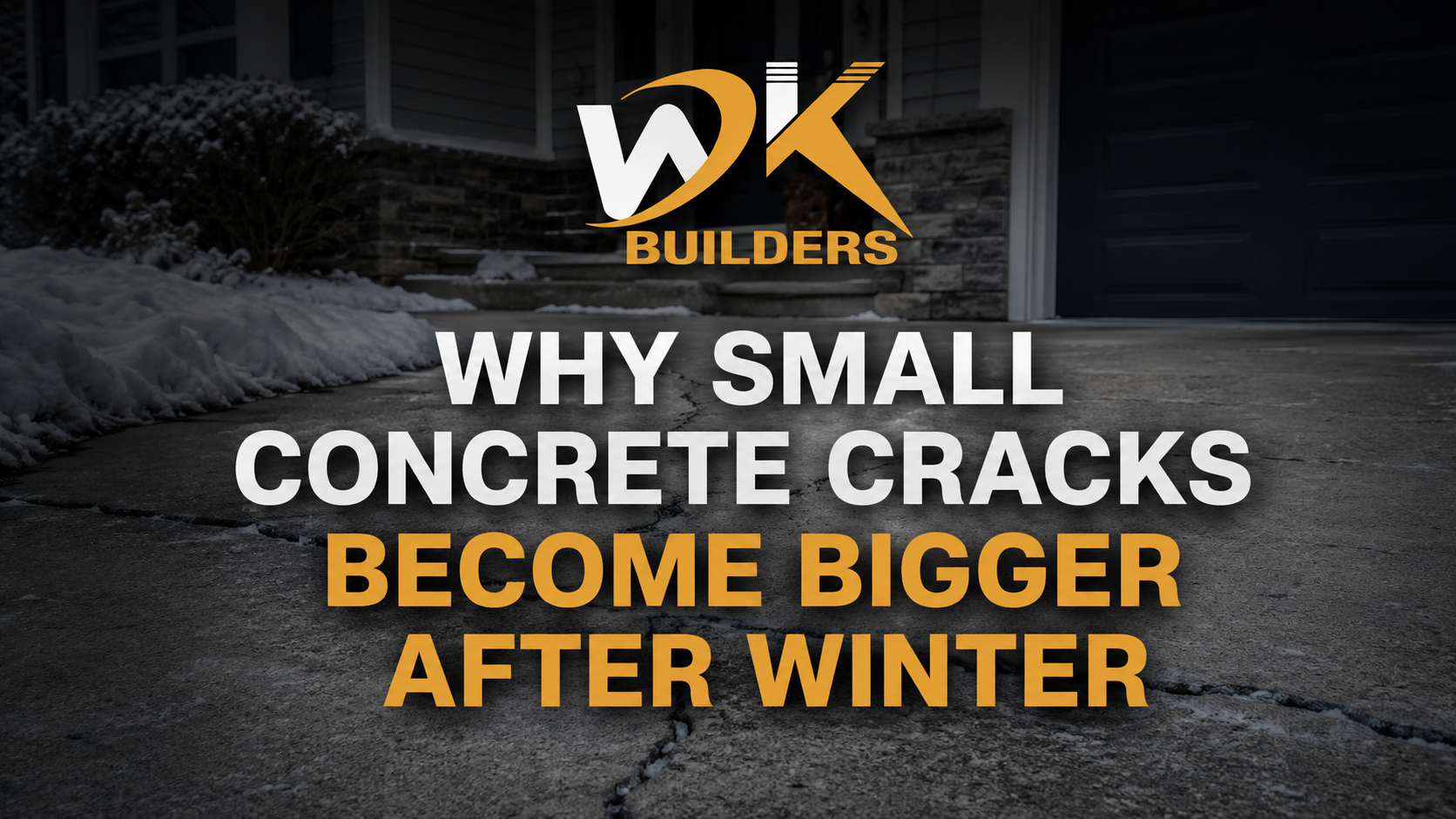
Winter Concrete Crack Damage: Why Cracks Grow
Winter concrete crack damage is one of the most common reasons small cracks become bigger problems by spring. A thin line in a driveway, walkway, patio, or slab may look harmless in the fall, but once water enters the crack and freezes, the pressure can force the concrete apart. In London, ON, repeated freezing and thawing can make cracks spread, edges crumble, and surfaces become uneven. Understanding how winter concrete crack damage happens helps homeowners act early and protect outdoor concrete before minor damage becomes a larger repair.
If you are planning seasonal concrete repairs or want to understand your options, you can explore more services on the West Key Builders homepage.
Why Small Concrete Cracks Get Worse After Winter
Concrete is strong, but it is not completely waterproof. Small cracks allow moisture to enter. When temperatures drop below freezing, that trapped water expands. When the weather warms up, the ice melts and more water can enter the same crack. This freeze-thaw cycle repeats throughout the winter, slowly widening the opening.
That is why winter concrete crack damage often appears worse after snow and ice are gone. A crack that looked minor before winter may become wider, deeper, or surrounded by chipped concrete. The damage may also spread into nearby joints or weak areas of the slab.
How Moisture Makes Cracks Spread
Moisture is the main driver behind winter concrete crack damage. Water can enter through cracks, worn joints, surface pores, and edges where concrete meets soil. Once moisture reaches the base under the slab, it can soften or wash away support material. This may cause sections of concrete to settle or shift. Moisture and freeze-thaw exposure can accelerate concrete deterioration, which is explained in this National Research Council Canada resource on concrete durability in winter conditions
When a crack combines with poor drainage, the problem grows faster. Water that pools on a driveway, walkway, or patio keeps feeding the crack. Over time, the concrete loses stability and may begin to slope, sink, or break apart. For larger flatwork issues, professional concrete slab services can help restore a stronger and safer surface.
The Role of Salt and De-Icers
Salt and de-icing products can make winter concrete crack damage worse, especially on older or already weakened concrete. These products help melt ice, but they also increase moisture movement on the surface. When melted water enters cracks and freezes again, the repeated expansion can lead to scaling, flaking, and deeper cracking.
This does not mean homeowners should ignore safety during icy weather. It means de-icers should be used carefully. Sand can help with traction, and removing snow early can reduce the amount of meltwater sitting on the surface.
Common Areas Where Winter Damage Shows Up
Winter concrete crack damage often appears in high-use areas. Driveways are especially vulnerable because vehicle weight adds pressure to cracks and weak spots. If water gets into a driveway crack, winter movement can make it spread across the slab or create uneven sections. If your driveway is showing repeated cracking, settlement, or surface wear, West Key Builders provides concrete driveway services for repair and replacement planning.
Walkways are another common problem area. Small cracks can turn into raised edges or uneven slabs, creating trip hazards near entrances, side yards, and backyard paths. Winter concrete crack damage on walkways should be addressed early because safety becomes a bigger concern once surfaces shift or separate.
Warning Signs to Check in Spring
After winter, homeowners should inspect outdoor concrete carefully. Look for cracks that have widened, new chips along the edges, flaking surfaces, standing water, or sections that feel uneven underfoot. Also check areas near downspouts, low spots, and shaded sections that stay wet longer.
If you see several of these signs, winter concrete crack damage may already be affecting the structure of the slab, not just the surface. Early repair can help prevent the crack from spreading into surrounding areas.
How to Reduce Winter Concrete Crack Damage
Prevention starts before winter. Seal small cracks when possible, keep joints maintained, and make sure water drains away from concrete surfaces. Downspouts should not dump water directly onto driveways, walkways, or patios. Snow should be cleared before it melts and refreezes.
Homeowners should also avoid ignoring small defects. A minor crack may seem cosmetic, but winter concrete crack damage can make it much worse in one season. Repairing cracks early is usually simpler and more cost-effective than waiting until the slab becomes uneven or unsafe.
When to Call a Professional
A professional inspection is recommended when cracks are widening, water keeps pooling, edges are crumbling, or slabs are shifting. Some cracks can be repaired, while others may require resurfacing, section replacement, or drainage correction. The best solution depends on what caused the crack and how much the concrete has moved.
If you want help assessing winter concrete crack damage around your home, reach out through the West Key Builders Contact page.
FAQ — Winter Concrete Crack Damage
1) Why do concrete cracks get bigger after winter?
Concrete cracks get bigger because water enters the crack, freezes, expands, and pushes the concrete apart. This is the main cause of winter concrete crack damage.
2) Can small cracks be repaired before winter?
Yes. Small cracks can often be repaired before freezing weather arrives. Early repair helps reduce winter concrete crack damage and prevents moisture from getting deeper into the slab.
3) Does salt make concrete cracking worse?
Salt can contribute to surface wear and moisture movement. If concrete already has cracks, salt and meltwater can increase the risk of winter concrete crack damage.
4) Which concrete areas are most at risk in winter?
Driveways, walkways, patios, steps, and slabs near poor drainage areas are most at risk because they experience moisture, traffic, and freeze-thaw stress.
5) When should I call West Key Builders for concrete cracks?
Call when cracks widen, slabs shift, water pools, or edges start crumbling. A professional assessment can determine whether repair, resurfacing, or replacement is the best option.
Image Alt Text: winter concrete crack damage on an outdoor concrete surface in London, ON showing cracks, freeze-thaw wear, and repair planning by West Key Builders.