
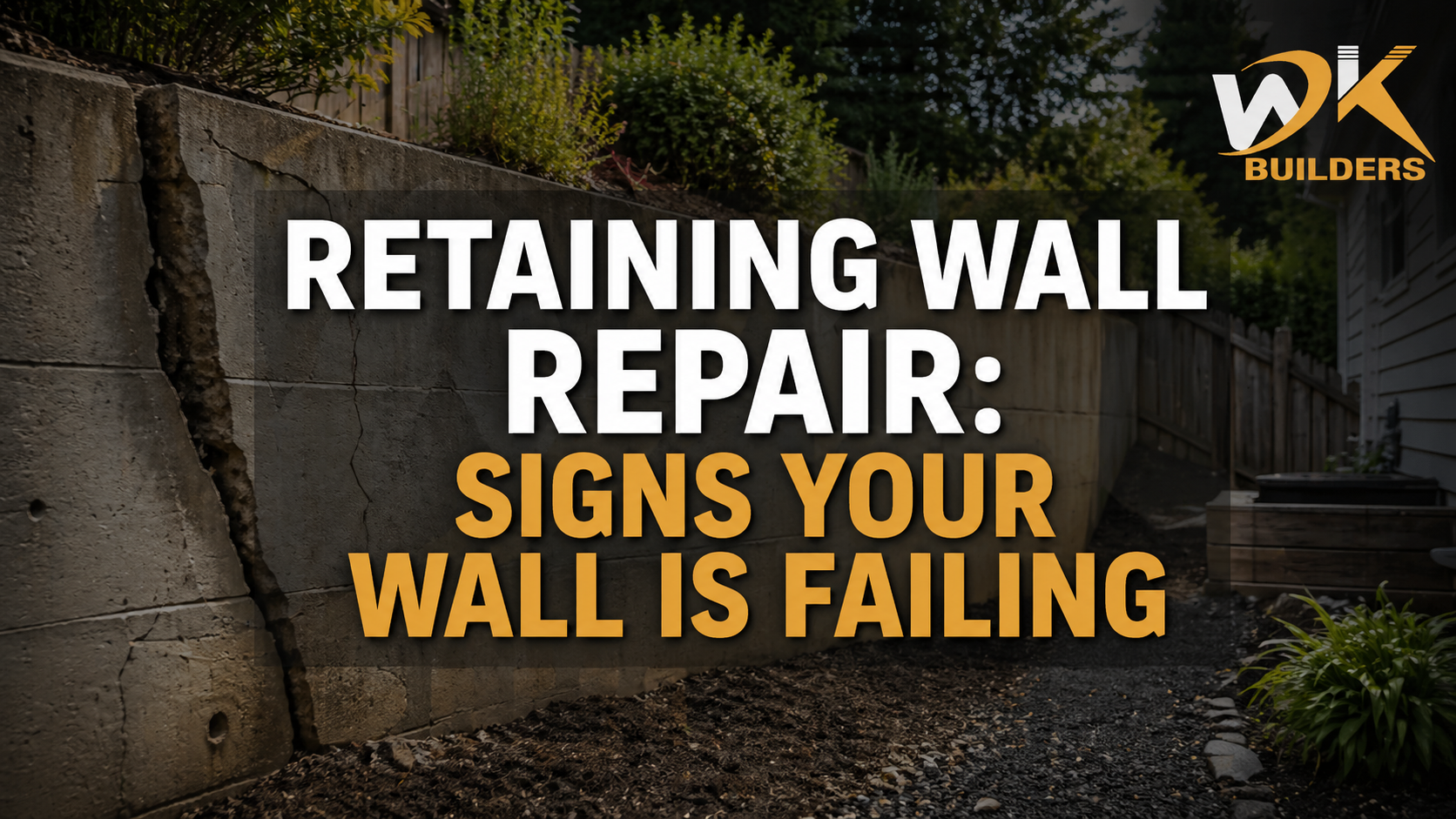
Retaining Wall Repair: Signs Your Wall Is Failing
Retaining wall repair is important when a wall starts leaning, cracking, bulging, or showing signs that water pressure is building behind it. A retaining wall is not just a landscaping feature. It holds back soil, protects grade changes, and helps keep outdoor spaces stable. When it begins to fail, the damage can spread to patios, walkways, driveways, gardens, and even nearby foundation areas. For homeowners in London, ON, where seasonal rain, snow, and freeze-thaw cycles can stress outdoor structures, retaining wall repair should be handled before small warning signs become major structural problems.
If you are planning concrete or backyard improvements, you can learn more about available services on the West Key Builders homepage.
Why Retaining Walls Fail Over Time
Most retaining wall problems come from pressure. Soil naturally pushes against the wall, but that pressure increases when water builds up behind it. If drainage is poor, the soil becomes heavier and starts forcing the wall outward. Over time, this can lead to leaning, cracking, separation, or complete failure.
Retaining wall repair often starts with figuring out whether the problem is caused by drainage, poor construction, soil movement, age, or a combination of these factors. A surface patch may hide cracks for a short time, but it will not solve the pressure pushing from behind the wall.
Common Signs You Need Retaining Wall Repair
Some retaining wall issues are easy to spot, while others develop slowly. Homeowners should watch for:
- The wall leaning forward
- Horizontal or stair-step cracks
- Bulging sections
- Soil washing out from behind or below the wall
- Water collecting at the base
- Gaps between wall sections
- Blocks or concrete sections shifting out of place
- Nearby patio or walkway slabs settling
These signs usually mean retaining wall repair is needed before the wall becomes unsafe. A leaning or cracked wall may still look stable, but if the cause is not addressed, the movement can continue.
Why Drainage Is the Biggest Concern
Drainage is one of the most important parts of retaining wall performance. A wall that does not allow water to escape has to hold back both soil and water pressure. That extra force can push the wall forward and cause cracking or movement.
Good retaining wall repair should include checking where water is coming from, how it flows, and whether the wall has proper drainage behind it. Without drainage correction, even a repaired wall can fail again. If water is also affecting nearby outdoor surfaces, it may be worth reviewing broader backyard solutions such as landscaping and backyard services to improve grading and water movement across the property.
Because grading and water movement can affect how outdoor structures perform, homeowners should pay attention to drainage around retaining walls. The CMHC landscape guide for Canadian homes offers helpful background on residential landscaping and drainage considerations.
How Retaining Wall Repair Protects Your Property
A failing retaining wall can affect more than one area of your yard. When soil shifts, nearby concrete surfaces can crack or settle. Walkways may become uneven, patios may start sloping, and garden beds may wash out after heavy rain. Retaining wall repair helps stabilize the area and reduce the risk of damage spreading.
For homes with significant grade changes, a properly repaired wall can also improve the usability of the yard. It keeps outdoor spaces more level, supports safer pathways, and helps maintain a cleaner, more finished appearance.
Repair Option 1: Crack and Surface Repair
If the wall is mostly stable and the damage is limited, retaining wall repair may involve cleaning cracks, applying proper repair materials, and restoring damaged areas. This works best when cracks are not connected to major wall movement. Surface repair can improve appearance and help prevent moisture from entering small openings.
However, if the wall is leaning or bulging, crack repair alone is not enough. The cause of movement must be addressed first.
Repair Option 2: Drainage Improvements
When water pressure is the main issue, retaining wall repair may include improving drainage behind or around the wall. This can involve correcting grading, adding drainage paths, or rebuilding sections so water can escape properly. Drainage improvements are often the difference between a temporary fix and a long-lasting repair.
Repair Option 3: Rebuilding or Replacing Failed Sections
If part of the wall has shifted badly, a section may need to be rebuilt. This type of retaining wall repair restores the wall’s alignment and support. In some cases, replacement is the better option, especially if the wall was built without proper base preparation or drainage.
For larger structural projects, West Key Builders can help with durable concrete solutions, including concrete poured retaining walls designed for long-term strength and support.
When to Call a Professional
You should call a professional if the wall is leaning, cracking widely, bulging, or allowing soil to wash out. These are signs that the wall may be under too much pressure. Retaining wall repair is not just about appearance; it is about safety, drainage, and stability.
A professional assessment can identify whether the wall can be repaired, partially rebuilt, or should be replaced. If you want West Key Builders to inspect your wall and recommend the right solution, reach out through the Contact page.
FAQ — Retaining Wall Repair
1) What causes retaining walls to lean?
Most leaning walls are caused by pressure from soil and water behind the wall. Retaining wall repair often includes drainage correction to reduce that pressure.
2) Can cracks in a retaining wall be repaired?
Yes, minor cracks can often be repaired if the wall is stable. If the wall is moving, retaining wall repair must address the cause before surface cracks are fixed.
3) Is drainage important behind a retaining wall?
Yes. Poor drainage is one of the biggest reasons retaining walls fail. Proper retaining wall repair should always consider water movement.
4) When does a retaining wall need replacement instead of repair?
Replacement may be needed if the wall is severely leaning, bulging, collapsing, or built on a poor base. A professional inspection can confirm the best option.
5) Can retaining wall repair protect nearby patios and walkways?
Yes. Retaining wall repair helps stabilize soil movement, which can reduce cracking, settling, and uneven surfaces around nearby concrete areas.