
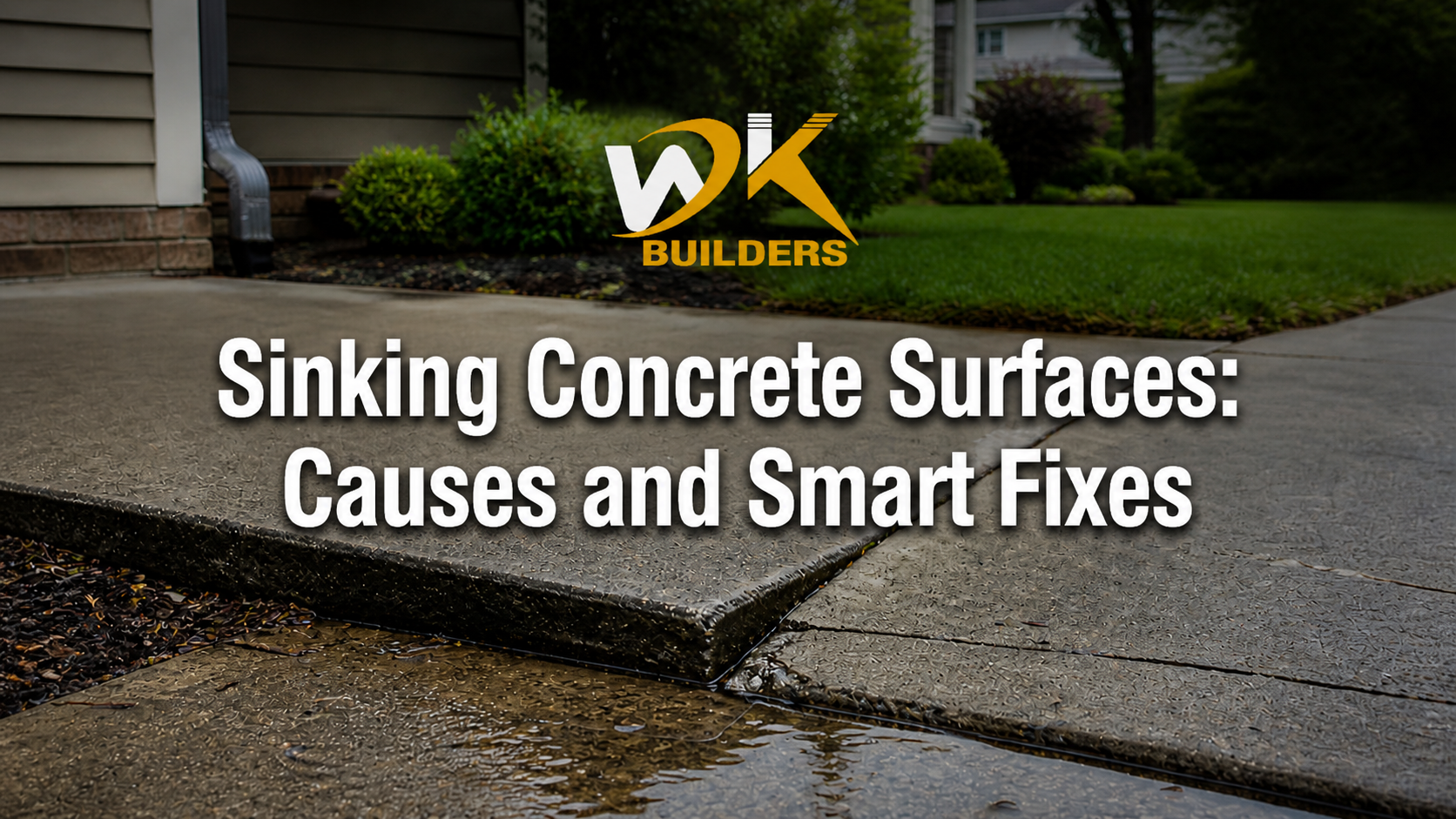
Sinking Concrete Surfaces: Causes and Smart Fixes
Sinking concrete surfaces are a common problem around homes, especially on driveways, patios, walkways, steps, and pool deck areas. At first, the change may look minor: one corner drops slightly, a slab tilts, or water starts collecting in a new low spot. Over time, however, sinking concrete surfaces can create trip hazards, drainage problems, cracking, and damage to nearby landscaping or foundations. For homeowners in London, ON, where soil movement and freeze-thaw cycles can affect outdoor concrete, it is important to understand why settlement happens and what can be done before the damage spreads.
If you are planning concrete repairs or exterior upgrades, you can learn more about available services on the West Key Builders homepage.
Why Concrete Surfaces Sink
Most sinking concrete surfaces are caused by problems underneath the slab, not just the concrete itself. Concrete needs a stable base to stay level. If the soil below shifts, washes out, or was not compacted properly during installation, the slab can lose support and begin to settle.
Water is one of the biggest causes of this problem. When water drains toward a slab instead of away from it, the base material can soften or erode. Once that happens, the slab may crack, tilt, or drop into the empty space below. This is why sinking concrete surfaces often appear near downspouts, low areas, driveways, walkways, and patios where water collects after rain.
Moisture and freeze-thaw exposure can accelerate concrete movement and surface damage. The National Research Council Canada resource on concrete durability in winter conditions explains how concrete responds to Canadian winter conditions.
Common Areas Where Concrete Settles
Some areas of a property are more likely to develop settlement than others. Driveways can sink where vehicles add repeated weight over weak spots. Walkways may shift when soil washes out along the edges. Patios can settle if water pools near one side or if the base was not prepared properly.
Sinking concrete surfaces are also common around entryways and steps, where uneven movement can create safety concerns. Around pools, settlement can affect drainage and create uncomfortable or unsafe walking areas. No matter where it happens, settlement should be taken seriously because the issue usually grows if the cause is not corrected.
Warning Signs Homeowners Should Watch For
Not all settlement is obvious at first. Watch for these signs:
- One slab sits lower than the slab beside it
- Water pools in the same spot after rain
- Cracks form near the sunken area
- Edges become uneven or create a trip hazard
- Gaps appear between concrete and nearby walls or steps
- Soil washes away along the side of the slab
These are common signs of sinking concrete surfaces. If you notice more than one issue, it is usually a good idea to have the area assessed before the damage becomes more expensive to fix.
Why Sinking Concrete Surfaces Should Not Be Ignored
A sunken slab is more than an appearance issue. Uneven concrete can become a serious trip hazard, especially on walkways, steps, and patios. It can also push water toward the wrong areas, including the home’s foundation. When water collects near the house, it can increase the risk of moisture problems and cracking over time.
Sinking concrete surfaces can also cause nearby concrete to fail faster. Once one section drops, the surrounding slabs may carry stress differently. This can lead to wider cracks, shifting joints, and additional settlement.
How Drainage Affects Concrete Settlement
Drainage plays a major role in whether concrete stays stable. If water is allowed to sit beside or under a slab, the base can weaken. In winter, trapped water can freeze and expand, creating more movement. Once the ground thaws, the slab may settle again.
That is why repairing sinking concrete surfaces should include looking at where water is coming from and where it is going. In some cases, the solution may involve improving grading, redirecting downspouts, or repairing drainage systems. If water collection is affecting nearby concrete, services like catch basin concrete repair may help restore better water control.
Repair Options for Sinking Concrete Surfaces
The right repair depends on the cause and severity of the settlement. If the slab is only slightly uneven and still structurally sound, repair may involve leveling, patching, or improving the surrounding base. If the slab is badly cracked, severely sunken, or poorly supported, replacement may be the better long-term choice.
For larger flatwork areas, professional concrete slab services can help restore a safer and more durable surface. A proper repair should not only improve how the concrete looks but also address the support and drainage conditions that caused the settlement in the first place.
How Homeowners Can Prevent Future Settlement
Preventing sinking concrete surfaces starts with water control. Keep downspouts directed away from slabs, avoid letting soil wash out along edges, and correct low areas where water sits. Regular inspections after winter can also help catch early signs of movement before they turn into larger repairs.
Homeowners should also avoid ignoring small cracks or gaps. These openings allow water to enter, which can worsen base erosion and speed up settlement. Early repair is usually simpler and more cost-effective than waiting until the slab becomes unsafe.
If you are dealing with uneven slabs, pooling water, or concrete that appears to be settling, contact West Key Builders through the Contact page for a professional assessment.
FAQ — Sinking Concrete Surfaces
1) What causes sinking concrete surfaces around a home?
Sinking concrete surfaces are usually caused by poor base support, soil erosion, water drainage problems, or freeze-thaw movement beneath the slab.
2) Are sinking concrete surfaces dangerous?
Yes, they can be. Uneven slabs can create trip hazards, especially on walkways, patios, steps, and pool deck areas.
3) Can sinking concrete surfaces be repaired without replacement?
Sometimes. If the slab is stable and the damage is limited, repair may be possible. Severe cracking or major settlement may require replacement.
4) How does drainage affect concrete settlement?
Poor drainage can wash away or soften the base below concrete. This often leads to sinking concrete surfaces and recurring cracks.
5) When should I call a professional?
Call when you notice uneven slabs, pooling water, growing cracks, or concrete pulling away from nearby surfaces. Early repairs can help prevent larger problems.