
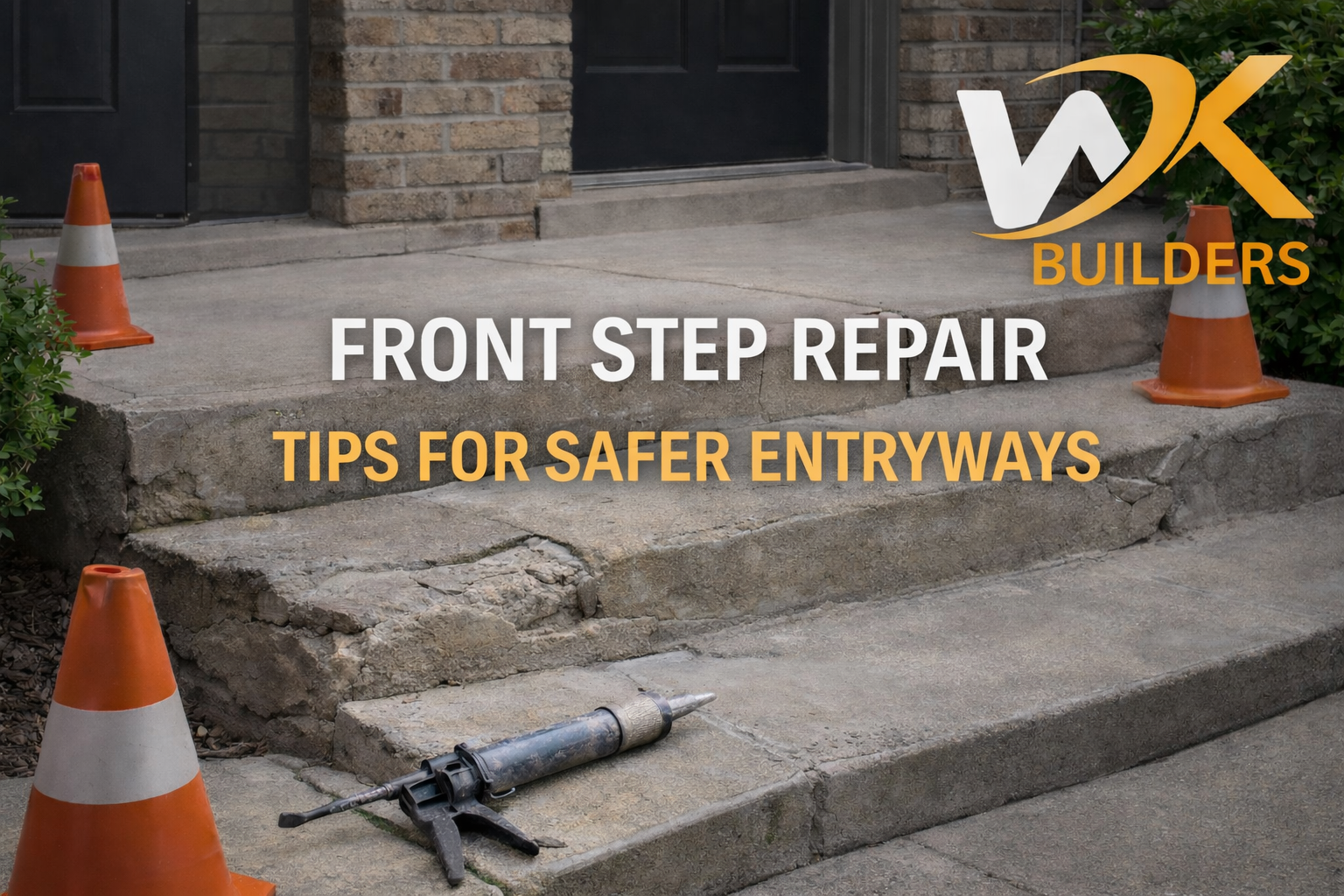
Front Step Repair: Why Steps Shift and How to Restore Safety
front step repair is one of the quickest ways to make your home safer, especially when the entrance steps have started to sink, crack, or feel uneven underfoot. In London, ON, entry steps are exposed to moisture, sun, and repeated freeze–thaw cycles that can slowly shift concrete and create trip hazards. The challenge is that step problems rarely happen overnight. They start with small movement, a tiny crack, or a slight height change between risers, and then gradually get worse until you notice it every time you walk in the door. With the right approach, front step repair can restore safe footing and improve curb appeal without always needing full replacement.
If you’re planning an upgrade or want a professional assessment, visit the West Key Builders homepage to explore services and recent work.
Why Entry Steps Shift in the First Place
Most movement begins under the steps. Soil settles naturally over time, especially around older homes where the ground near the foundation may have been disturbed or backfilled. Water can also soften the base material beneath the steps, which leads to uneven support. In winter, that moisture freezes and expands, creating upward pressure and shifting sections slightly out of place. When the freeze–thaw pattern repeats year after year, concrete can crack, corners can chip, and the surface can start to flake. Because these issues often share the same root cause, front step repair is most successful when it addresses both the visible damage and the conditions that caused it.
Warning Signs You Shouldn’t Ignore
Front entry steps should feel consistent and stable. If you notice changes, it’s usually time to consider front step repair before the damage spreads into the landing, walkway, or porch area. Common warning signs include:
- One step feels higher or lower than the next
- Cracks across the tread or down the face of the step
- Chipping edges or crumbling corners (spalling)
- Steps pulling away from the landing or porch
- Water pooling at the base of the stairs
- A slight wobble near a corner or outer edge
Even a small difference in riser height can create a trip hazard for local safety expectations around stairs and handrails, refer to the City of London property standards for stairs and handrails, especially when you’re carrying groceries, stepping out at night, or dealing with wet or icy conditions.
How Front Step Repair Improves Safety
Safety is mostly about predictable movement. When steps are uneven, your body misjudges the height and angle, which increases the risk of trips and falls. Front step repair focuses on restoring level treads, consistent riser heights, and stable edges. It also improves traction by removing flaking surfaces and smoothing rough patches that can catch a toe. Just as importantly, front step repair helps prevent water from working into cracks and worsening the damage during winter.
Repair Option 1: Crack Repair and Edge Rebuilding
If the steps are generally stable but have visible cracking, targeted repairs may be enough. Front step repair often involves cleaning out cracks, using compatible repair materials, and rebuilding broken edges and corners so the steps feel solid again. This is especially common when cracks come from age, minor settling, or surface wear rather than major structural movement. The goal is to stop moisture from getting deeper into the concrete and to remove sharp, crumbling edges that can become unsafe.
Repair Option 2: Resurfacing Worn or Flaking Steps
When the concrete is sound but the surface is pitted, flaking, or rough, resurfacing can restore a cleaner finish and better traction. This type of front step repair works well when you want a refreshed look without rebuilding the entire entry. It can also help blend patched areas so the steps look consistent, not like they were “spot fixed.” Resurfacing is most effective when paired with water control so the new surface isn’t damaged by the same moisture issues that caused the original wear.
Repair Option 3: Fixing Uneven or Sunken Steps
When one side of the steps sinks or the stairs tilt, patching alone won’t solve the problem. In these cases, front step repair may require rebuilding or resetting sections so the steps return to safe and consistent measurements. This is often recommended when the unevenness creates a clear trip hazard or when movement is ongoing. The best long-term outcome comes from restoring proper support underneath so the steps don’t continue shifting after the repair.
Repair Option 4: Repairing the Connection Between Steps and the Porch
Sometimes the steps aren’t the only issue. If the porch landing is cracked, settling, or pulling away, it can force the steps out of alignment. Front step repair is often more durable when the entire entry system is evaluated together. If your landing or porch is showing signs of damage, combining step work with professional porch repair can help create a stronger, longer-lasting result and prevent repeating problems at the joint where the steps meet the top landing.
Drainage Matters More Than Most Homeowners Think
One of the most common reasons repairs don’t last is water. If runoff continues to collect near the entry, the ground under the steps stays soft, cracks keep widening, and winter freeze–thaw cycles do more damage. A smart front step repair plan includes looking at downspouts, grading, and drainage pathways near the stairs. If the problem is tied to drainage infrastructure, it may also be worth checking nearby systems such as catch basin concrete repair to keep water moving away from the entry zone.
When Replacement Makes More Sense Than Repair
Front step repair is often the best choice, but replacement may be recommended when the damage is too extensive or the structure is no longer sound. Replacement is more likely if:
- Deep structural cracks run through multiple sections
- The steps are separating significantly from the porch/landing
- Settlement is severe and continuing
- Prior repairs have failed repeatedly due to movement
- The stairs no longer meet safe, consistent step heights
A professional assessment helps you avoid paying for repairs that won’t hold up through another winter season.
If you want West Key Builders to inspect your entrance steps and recommend the safest solution, reach out through our Contact page.
FAQ — Front Step Repair
1) What is the most common cause of front step damage?
Settlement and moisture are the most common causes. Front step repair often includes addressing support and drainage so the steps don’t keep shifting.
2) Can I repair cracks on my steps without fixing the cause?
You can, but repairs may not last. Front step repair is most effective when cracking is repaired and water issues are controlled to prevent repeat damage.
3) Is it dangerous to have uneven front steps?
Yes. Uneven risers increase trip risk, especially in low light or winter conditions. Front step repair restores consistent heights for safer footing.
4) How do I prevent my steps from shifting again after repair?
Redirect downspouts, reduce pooling, and keep water away from the entry. Preventive front step repair planning focuses on moisture control and stable support.
5) When should I call a professional for front step repair?
Call when steps feel uneven, cracks widen, edges crumble, or the stairs pull away from the landing. Early front step repair usually costs less and lasts longer.